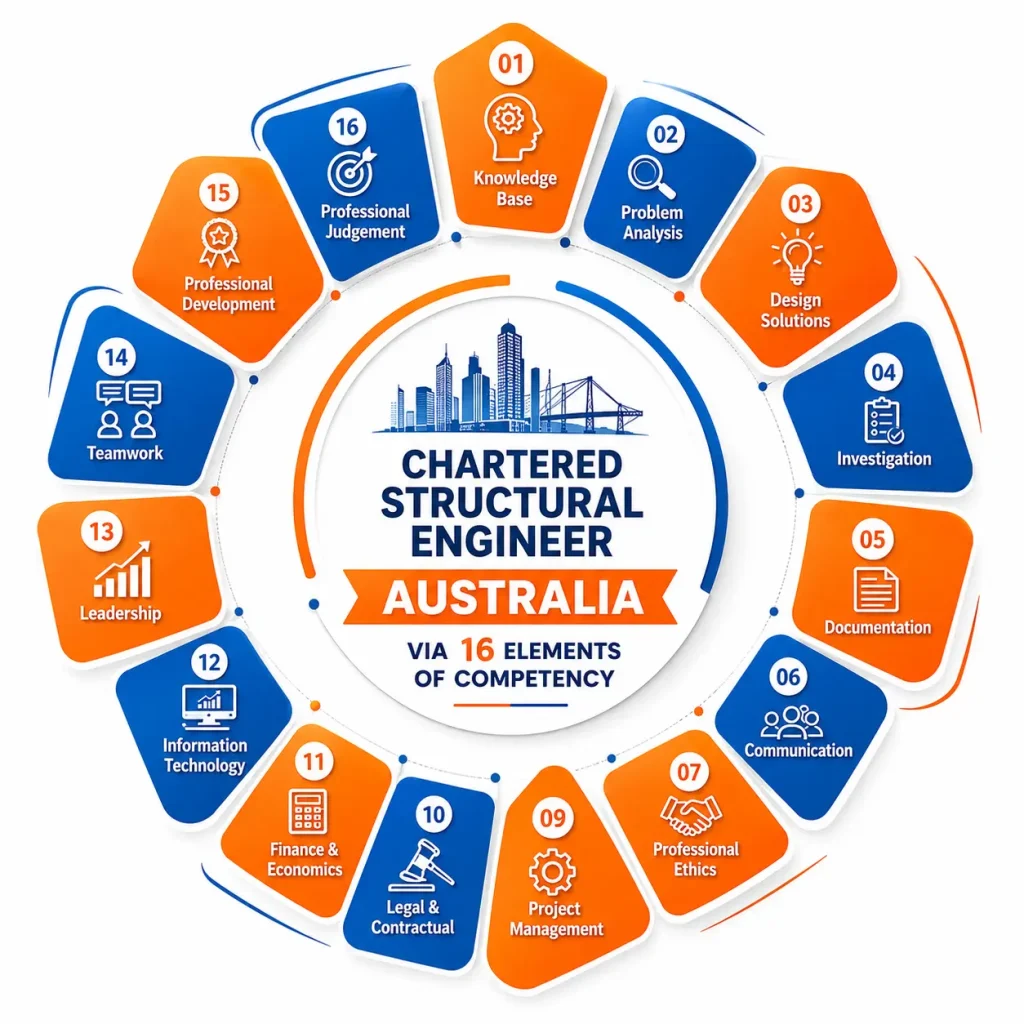
To become a Chartered Structural Engineer in Australia, you need to join Engineers Australia (EA), have at least five years of engineering experience, and demonstrate competence across 16 elements linked to your occupational category and area of practice. You must continue meeting these competencies after receiving the Chartered credential.
To become a structural engineer with Engineers Australia (EA), the process requires you to show that you can apply engineering knowledge responsibly, assess risk, communicate with stakeholders and make sound technical decisions in your area of practice.
CDRAustralia.Org is the top most trusted agency in Australia and offers expert guidance to maximize your chance of approval for your chartered credential with EA.
How to Draft 16 Elements of Competency for a Chartered Structural Engineer?
Engineers Australia (EA) groups the 16 competency elements into four areas. You must demonstrate competence across each area rather than relying only on your technical design experience.
The four areas are:
👉 Personal commitment
👉 Obligation to the community
👉 Value in the workplace
👉 Technical proficiency
Your evidence should reflect your actual engineering work and show how you apply professional judgement in structural engineering activities. The assessment focuses on your demonstrated capability, not simply your job title or academic qualification.
The following table outlines the areas you need to address when preparing for Chartered assessment with Engineers Australia.
| Personal commitment | Deal with ethical issues; practise competently; take responsibility for engineering activities |
| Obligation to the community | Develop safe and sustainable solutions; engage with the relevant community and stakeholders; identify, assess and manage risks; meet legal and regulatory requirements |
| Value in the workplace | Communicate; manage performance; take action; exercise judgement |
| Technical proficiency | Apply advanced engineering knowledge; apply local engineering knowledge; analyse problems; apply creativity and innovation; evaluate outcomes |
These elements apply to the relevant occupational category and area of practice. For a structural engineer, your evidence should relate to structural engineering responsibilities and the decisions you make in professional practice.
Earning chartered status with Engineers Australia is an important step for engineers who want recognition and career advancement. This guide outlines the practical steps to earn your chartered credential as a structural engineer.
Step 1: Confirm Your Eligibility
You need to meet two basic conditions before applying for the Chartered credential:
- You must be an Engineers Australia member.
- You must have five years or more of engineering experience.
Your experience should support the level of responsibility expected from a Chartered engineer. Keep records of the projects, assignments and professional decisions that show your capability across the 16 elements.
Only your experience will not serve as a competence evidence. It is important to provide clear proof of how you applied engineering knowledge, met the regulatory requirements, assessed the risks and accepted responsibility for your work.
Step 2: Relate Your Experience to Structural Engineering
Ensure that the application focuses on real-world evidence from the structural engineering work. Choose instances that reflect your contribution, issues you addressed, action you took and the outcome.
Some of the best evidence may include your work connected with:
- Structural design and analysis
- Technical reviews along with engineering recommendations
- Risk identification as well as management
- Compliance with legal and regulatory requirements
- Communication with clients, project teams and other stakeholders
- Evaluation of engineering outcomes
- Safe and sustainable structural solutions
Present your role clearly. A project description should not suggest that your entire team’s work represents your individual competence. Explain the decisions you made, the technical reasoning behind them and the responsibility you held.
Step 3: Prepare for the Online Application
The supplied Engineers Australia MSA online guide describes the main application workflow through the EA portal. You begin by logging in or creating an account. After login, select the tile for a migration skills or Stage 1 assessment, then select the migration skills assessment tile to start a new application.
For any online application process, follow the instructions shown in the relevant Engineers Australia service and select the correct pathway. The MSA guide states that you should:
- Choose the relevant assessment pathway.
- Upload the documents required for your assessment.
- Save the application if you need to return to it later.
- Submit the application and pay once the information is complete.
- Monitor the application status screen for updates or requests from the assessor.
The guide relates to migration skills assessment. You should not treat it as a replacement for the Chartered credential requirements. Use the Chartered page for eligibility and competency information, then follow the instructions for the service you are applying for.
Step 4: Organise Your Evidence
An effective application is dependent on clear, relevant and organised evidence. Ensure to map every example to one or more competency elements before final submission.
Your evidence should make the following points clear:
- What structural engineering problem did you address?
- What responsibility did you personally accept?
- Which engineering knowledge did you apply?
- How did you identify and manage risk?
- Which legal, regulatory or professional requirements affected your decision?
- How did you communicate with stakeholders?
- What was the result of your work?
- What did you learn from the outcome?
Avoid submitting descriptions that list duties without showing professional judgement. Engineers Australia needs to assess your competence through the way you performed your work.
Step 5: Submit and Monitor the Application
After uploading the relevant documents, you can submit the application and make the required payment through the portal. The MSA guide states that you can monitor your application status online and respond to requests from the assessor through the status screen.
Check every document before submission. Your employment history, project examples and competency evidence should present a consistent account of your structural engineering experience. If you save an application before submitting it, the guide states that you can log in later and resume it from the unsubmitted applications list.
Maintain Your Chartered Competence
Chartered status is not limited to the initial assessment. Engineers Australia states that you need to meet and maintain competency across the 16 elements related to your occupational category and area of practice.
Continue recording your structural engineering responsibilities, professional decisions, technical development and involvement with stakeholders. These records can help you demonstrate ongoing competence and keep your professional evidence current.
Prepare for Chartered Practice with Engineers Australia
Your route to becoming a Chartered Structural Engineer begins with Engineers Australia membership, the required experience and evidence mapped to all 16 competency elements. A focused application gives assessors a clear view of your technical proficiency, professional responsibility and contribution to safe, compliant structural engineering work.
Use the Chartered requirements as your primary reference, and follow the relevant Engineers Australia portal instructions carefully before submitting your application.