The AACA Overseas Qualifications Assessment (OQA) Stage 2 is the final part of the assessment for applicants who previously received a successful OQA Stage 1 outcome before March 2022. You must submit an architectural portfolio, provide written statements against the 2021 National Standard of Competency for Architects (NSCA), and attend a Competency Assessment Interview.
Your outcome depends on how convincingly you demonstrate that your overseas qualification has equipped you with the skills, knowledge and competencies expected from a graduate of an accredited Australian architecture programme.
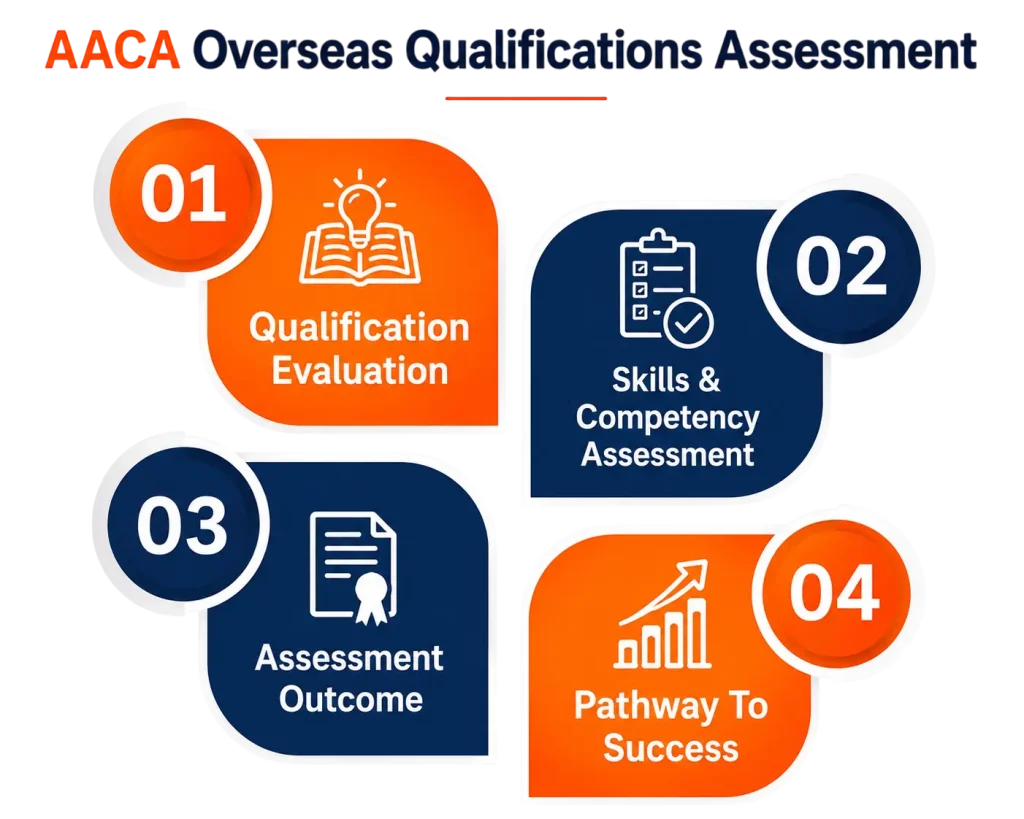
What AACA Stage 2 Assesses?
AACA (Architects Accreditation Council Of Australia) Stage 2 does not assess your portfolio as a collection of attractive drawings. It examines the evidence your projects provide about your architectural skills and professional capability.
The assessment checks whether you can demonstrate the relevant NSCA performance criteria through your project work and interview responses. Your submission must create a clear connection between your academic or professional experience and the competencies expected under the Australian standard.
The Stage 2 assessment includes three connected components:
- A portfolio containing three to four architectural projects.
- Written summary statements addressing the 2021 NSCA.
- A Competency Assessment Interview.
| Assessment Component | Primary Purpose & Requirement |
| 1. Architectural Portfolio | Must contain 3 to 4 projects that provide meaningful evidence of your technical, design, and professional capabilities, clearly showing your individual contribution. |
| 2. Written Summary Statements | Direct statements that address the 2021 NSCA, explicitly linking your project evidence to the required performance criteria. |
| 3. Competency Assessment Interview | A verbal assessment giving you the opportunity to explain, defend, and discuss the evidence submitted in your portfolio and statements. |
Each component supports the same purpose: showing that you meet the required competencies at the expected level. A strong application presents consistent information across your portfolio, written statements and interview.
Check Your Eligibility Before Applying
You can apply for OQA Stage 2 only if you previously completed a successful OQA Stage 1 assessment with AACA before March 2022. You must submit evidence of your Stage 1 outcome with your application.
This requirement makes an eligibility check the first practical step. If you do not have the relevant successful Stage 1 outcome, Stage 2 only may not be the correct application route. AACA directs applicants to its earlier sections on assessment for new applicants, eligibility, assessment criteria and the application process.
Read the current OQA Applicants Guide before preparing your documents. The Stage 2 webpage states that its information is a summary, so the guide and templates remain the principal preparation documents.
Prepare a Portfolio That Shows Competence
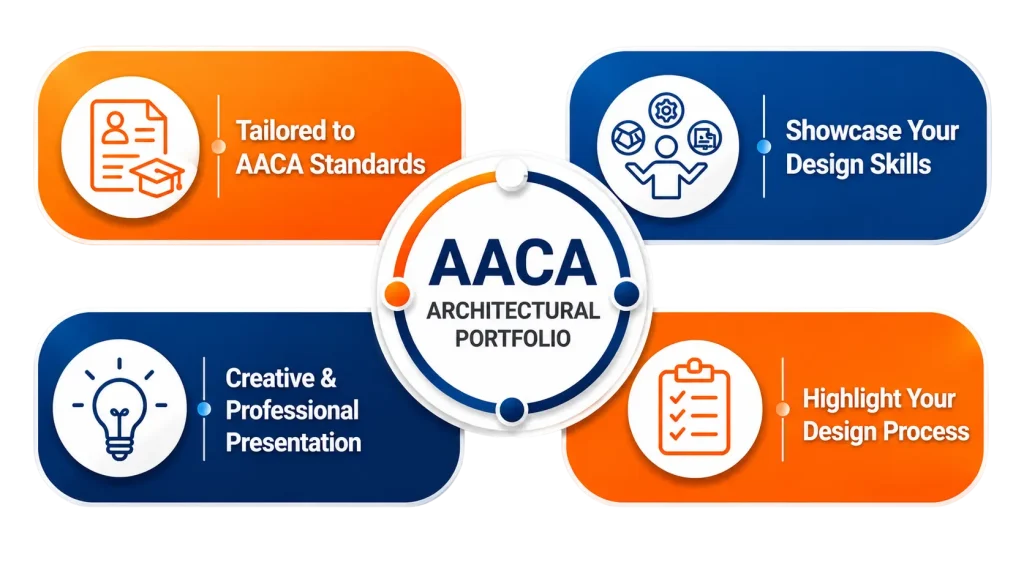
Your AACA architectural portfolio must contain between three and four architectural projects. The project selection matters: each project should give you a clear opportunity to demonstrate relevant knowledge and skills under the NSCA.
Select projects that provide meaningful evidence across your experience rather than repeating similar work. A portfolio with four projects is not automatically stronger than one with three. The evidence must be relevant, clear and sufficient for the competencies you claim.
Before finalising your selection, review each project against the following points:
- What was your role in the project?
- Which decisions can you explain from your own experience?
- What technical, design or professional knowledge does the project demonstrate?
- Which NSCA performance criteria can the project support?
- Can you discuss the project confidently during the interview?
Do not present group work as though you completed every task yourself. State your contribution accurately, including the decisions you made, the work you produced and the responsibilities held by other team members. Clear authorship helps assessors evaluate your individual competence.
Write Direct NSCA Summary Statements
Your written summary statements must address the 2021 NSCA. They should explain how your projects demonstrate the relevant performance criteria, rather than simply describe the appearance or purpose of each project.
Use direct evidence from your work. Explain the situation, your responsibility, the action you took and the result. This approach gives the assessor a practical basis for reviewing your competency.
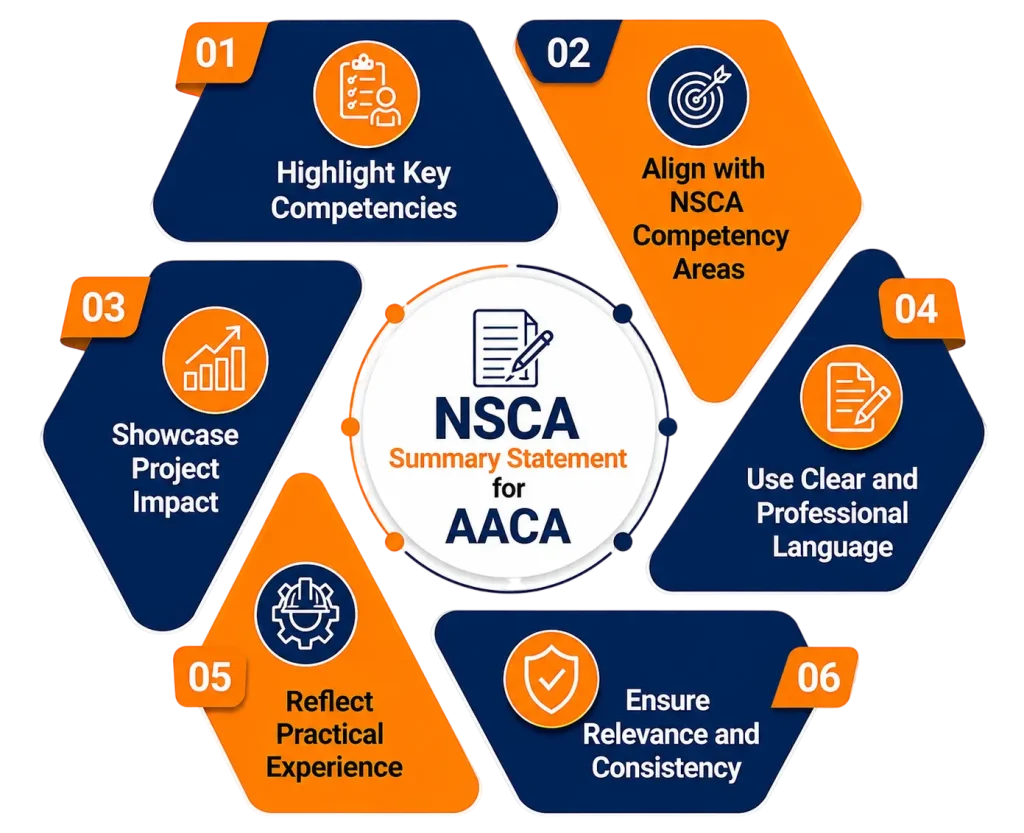
For each statement, check that:
- The relevant NSCA performance criteria are clearly identified.
- Your personal role is easy to distinguish.
- The evidence comes from the project presented in your portfolio.
- The explanation shows knowledge and professional judgement.
- The wording should be consistent and accurate with your interview responses.
It is wise not to make any unsupported claim without showing evidence. A short and precise explanation with relevant evidence is more effective than a long one that does not meet the criteria.
Prepare for the Competency Assessment Interview
The Competency Assessment Interview gives you an opportunity to explain and defend the evidence in your submission. You should know every project in your portfolio, including its context, your role, key decisions, technical issues and professional responsibilities.
Always review the written statement before the interview. Ensure to identify the areas that require further explanation. Assessors expect you to clarify how a particular project shows the required NSCA performance criterion. Keep your response focused on your experience.
During preparation, practise explaining:
- The project brief and relevant constraints.
- Your specific contribution.
- The design and technical decisions you made.
- The risks, problems or changes you addressed.
- The knowledge that informed your decisions.
- The outcome of your work and any lessons gained.
Do not memorise lengthy answers. A memorised response can become difficult to adapt if the assessor asks for clarification. Prepare the evidence thoroughly, then answer in clear language that reflects your actual experience.
Follow the Current Submission Requirements
The AACA webpage confirms that new submission requirements based on the 2021 NSCA took effect on 1 March 2022. Every application submitted must follow the 2022 requirements. You should use the current guide and templates provided by AACA rather than relying on older application material.
This point matters for applicants who have reviewed earlier examples or received advice based on previous assessment requirements. Older formats may not address the current NSCA criteria or provide the information expected under the present process.
Check your documents before submission. Confirm that your Stage 1 outcome evidence, portfolio, summary statements and other requested material follow the instructions in the OQA Applicants Guide. Keep the information consistent across every document.
Present Evidence That Supports Your Application
A successful Stage 2 application is built around evidence. Your portfolio should support your written statements, and your written statements should prepare you for the interview. Any difference between these components may make your professional role harder to assess.
AACA determines the outcome by considering your ability to convincingly demonstrate the relevant NSCA competencies. You can improve the quality of your submission by selecting relevant projects, describing your contribution accurately and linking each claim to clear project evidence.
Give Your Application a Final Review
Before lodging your application, read the complete submission as an assessor may read it. Check whether each competency claim is supported by specific evidence and whether your portfolio allows the assessor to find that evidence without unnecessary searching.
Use the AACA video guide, current templates and OQA Applicants Guide during your preparation. These resources are identified on the Stage 2 webpage and provide the proper reference point for document preparation and interview readiness.
Build a Clear Case for Your Competence
AACA OQA Stage 2 gives you the opportunity to demonstrate that your overseas qualification has prepared you to meet the relevant Australian architectural competency standard. Approval cannot be guaranteed, yet a focused submission can present your evidence more convincingly.
Choose three to four suitable projects, connect them directly to the 2021 NSCA, explain your individual contribution and prepare for detailed interview discussion. When every part of your application supports the same evidence-based case, the assessor can evaluate your competence with greater clarity.
