Moving to Australia as a Human Resource Manager requires a formal assessment of your skills. The Institute of Managers and Leaders (IML) performs this task for the Australian government to verify your professional background. We look at this as a vital step in your migration pathway, as it proves your work experience meets the standards set for senior roles. You need to show that you have managed people and strategy, rather than just handling administrative tasks. CDRAustralia.Org provides expert guidelines on IML skills assessment with 100% plagiarism free without using AI tools until you get positive outcome for Australia migration.
Why Do HR Managers Need the IML Skills Assessment?
You need this assessment to satisfy the requirements for various skilled migration visas. It acts as an official confirmation that your career profile aligns with Australian expectations. If you skip this, your visa application might be delayed or rejected. We find that many applicants underestimate the need for this validation, but it is often the foundation for a successful move. It confirms your seniority and your ability to lead an HR function at a strategic level.
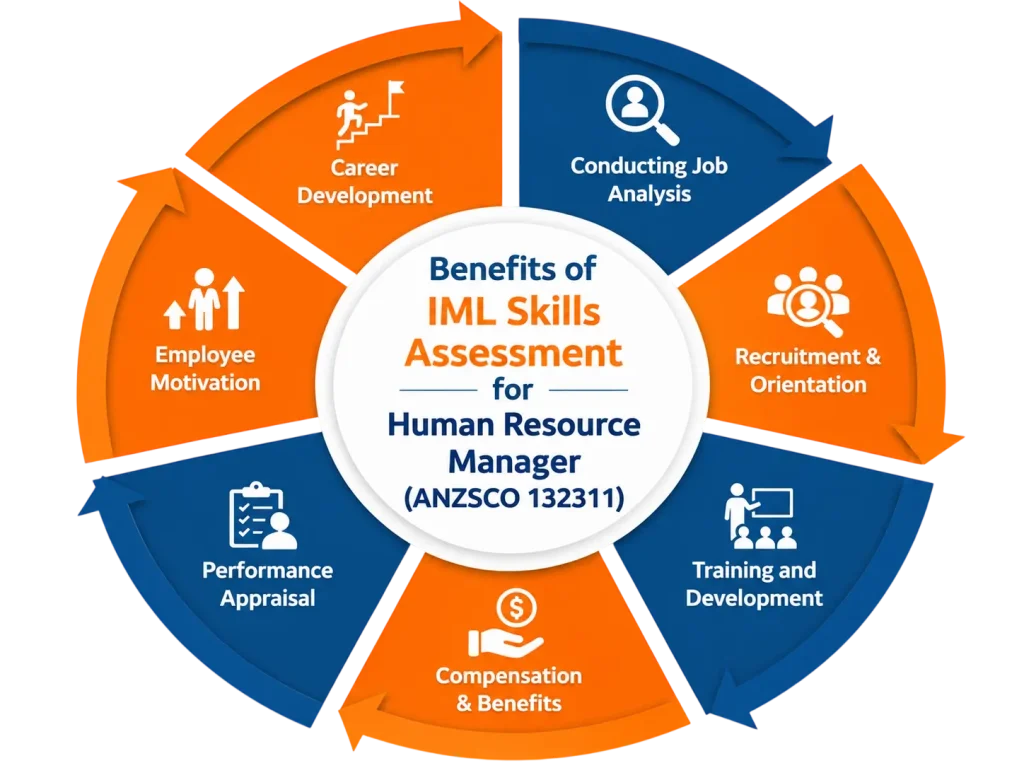
Scope of Human Resource Manager in Australia
This assessment is for senior HR professionals with genuine decision-making authority. You should hold the most senior functional position for HR within your business or division. Your daily work must show you have the power to make key decisions. If you only provide operational support or report to junior staff, you likely fall outside the scope of this assessment. You generally report to C-suite executives or department heads, which demonstrates your strategic influence in your current workplace.
What are the Required Documents?
When you prepare your application, collect your documents with care. You should have:
- Educational degree certificates and official academic transcripts.
- Detailed employment references covering at least your last ten years of work.
- Your updated curriculum vitae that matches your reference letters.
- Organisation charts showing exactly where you sit within your company hierarchy.
- Proof of payment for your roles if requested.
Overview of the IML Assessment Criteria
Your success depends on your academic history and your time spent in the industry.
- Relevant degree: If you hold a Bachelor’s or Master’s degree in a field relevant to HR, you need at least three years of experience. Two of those years must be in an HR Manager role.
- No relevant degree: If your education does not align perfectly, you need five years of experience. Two of those years must be as an HR Manager.
- Currency of Industry Skills: You must show evidence of at least one year of full-time, paid employment in an HR role within the last five years.
Job Roles and Responsibility Under ANZSCO 132311
Your experience must reflect these core tasks to be accepted:
- Planning, directing, and coordinating an organisation’s HR activities and human resource strategies.
- Developing and implementing policies related to staff recruitment, selection, and induction.
- Managing employee relations, conflict resolution, and disciplinary procedures.
- Overseeing performance management systems and pay structures to ensure staff retention.
- Directing training and development programs to improve employee capabilities and organisational efficiency.
Ways to Show Your Competency via Written Responses Using The STAR Method
The assessment requires three written statements about your management history. Use the STAR method for each to keep your story clear.
- Describe the Situation you faced
- The Task you needed to finish
- The Action you took personally
- The final Result
This helps the assessor see your actual contribution. Keep each response under 500 words and focus on your leadership in a professional setting.
IML Competency Framework
You must select one competency from each of these three areas: Manage self, Manage and lead others, and Manage and lead the business. This framework includes skills like effective communication, coaching, delegation, and strategic planning.
By choosing one from each group, you give a complete view of your leadership. You show that you can lead yourself, your team, and your organisation effectively. This approach turns your application into a clear map of your senior leadership capacity.